Healthcare

Zero clicks, new rules: the healthcare marketer's guide to AI search

May 12, 2026Gradial
Healthcare marketer at a conference session
HealthcareGenerative Engine Optimization

Search was a popular topic at the Healthcare Marketing and Physician Strategies Summit this week. I attended four sessions across two days: Content, Voice & Search in the AI Era; AI-Ready Patient Search: Beyond SEO; Reviews, AI Search & Results; and The Impact of AI on Healthcare Search.

It was no surprise the topic was still new to the audience and even to some of the presenters. Having sat through 50+ of these conversations with healthcare enterprises in recent months, I wanted to share where my thinking has landed.

Zero clicks

A question came up: "How will we measure search success when there aren't clicks?" Historically, when patients or caregivers searched on Google, a list of websites appeared and they clicked through. The hospital or provider then reviewed website analytics to see which keyword searches led patients to their sites.

Today, Google serves results in AI-generated overview summaries, and many users start their searches directly inside an AI platform like ChatGPT, Claude, or Perplexity. The result is far less click-through reporting data to work with.

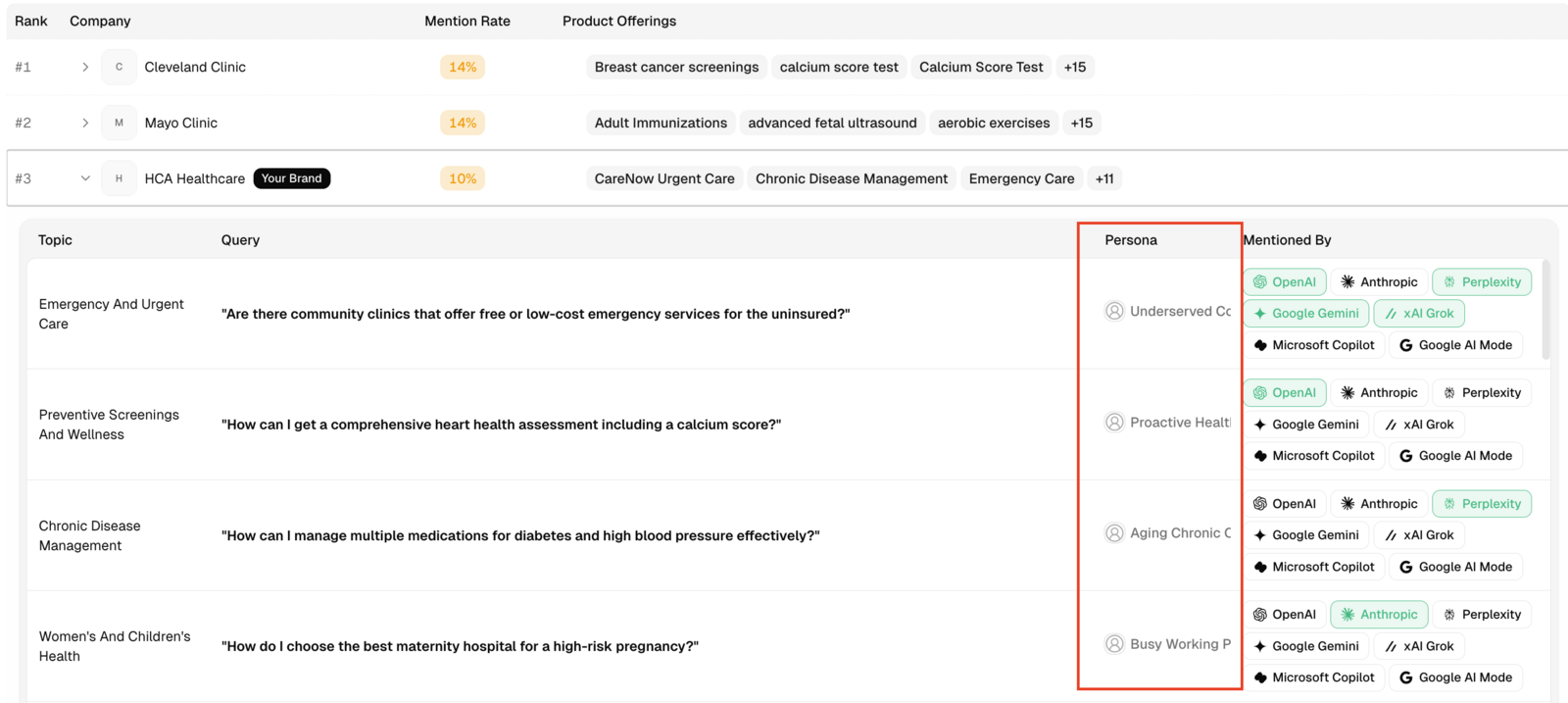
New reporting is available, however. In one session a presenter suggested marketers can't see what an agent's search results look like. They can. While each user's AI search is personalized, Gradial reports agent results by persona, which is the view marketing teams actually need.

Gradial platform showing generative engine optimization reporting by persona

SEO does not equal GEO

A common misconception is that optimizing for agents is the same as optimizing for SEO. It isn't. AI crawlers do not execute JavaScript, so JS-rendered content is invisible to them during crawling. Gradial surfaces this gap directly, showing marketers what percentage of their site is readable by agents and what is hidden behind JavaScript.

New metrics to measure

I was surprised by how little time presenters spent on citations: the one GEO metric marketers can directly impact through content creation and optimization. Citations are essentially your owned content, and LLMs over-index on informational content because it lets users make decisions for themselves.

That is an opening for marketers. Increasing your citation rate by publishing new informational content on the topics you want to be known for is something you can act on right away.

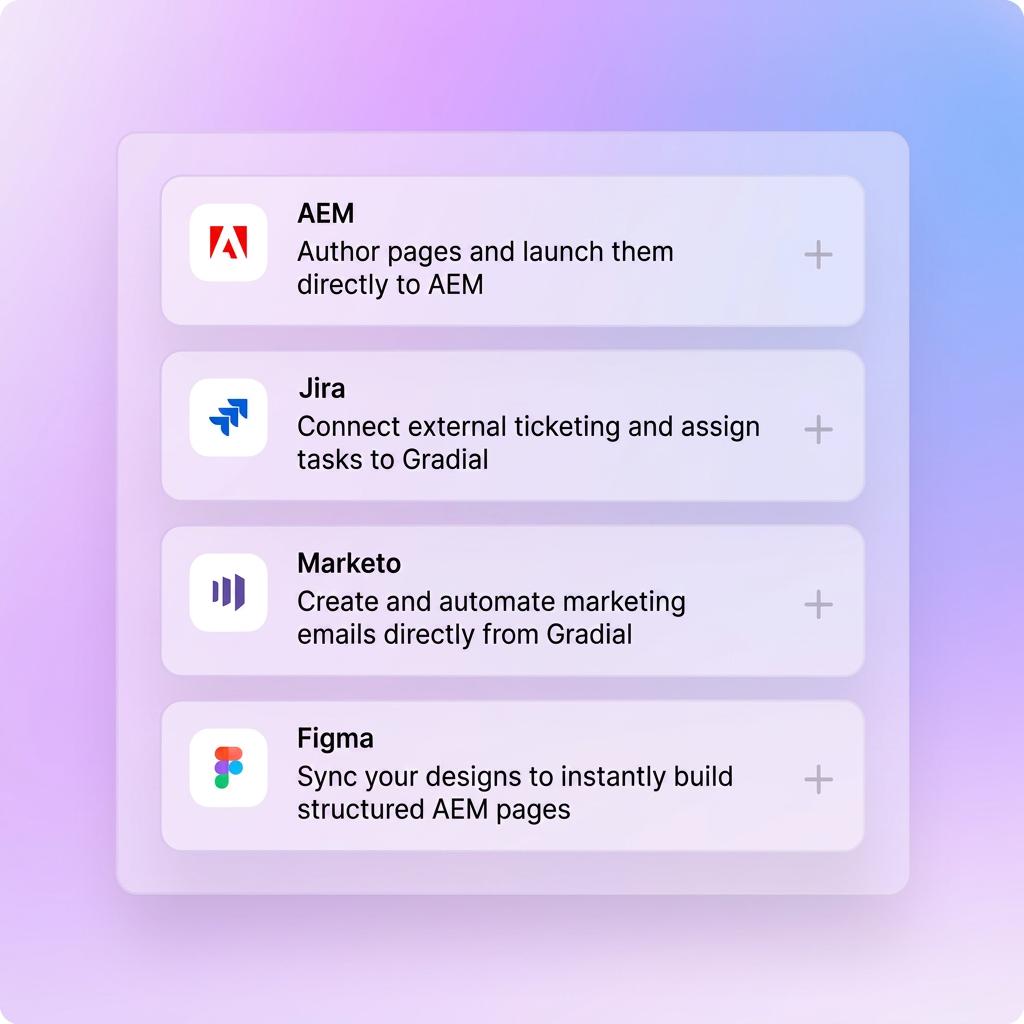
Gradial makes that closed-loop. We surface recommendations for the content most likely to lift your citation rate. From there, click Create Task to draft the content inside Gradial, integrated with your CMS, regardless of architecture, traditional or headless, so structured content lands in the system your team already publishes from, is checked against your brand and regulatory guidelines, validated for WCAG accessibility, and routed through human-in-the-loop approval before publishing in minutes.

The other key GEO metric is mentions. Mentions are essentially your earned content, the way an LLM references your brand inside its summary. You can't directly control how you are mentioned, but over time, citations, combined with other signals, can indirectly influence your mention rate.

Gradial workflow showing content recommendations and task creation for GEO

Integrated with analytics for performance over time

Gradial measures the impact of citations and mentions alongside the rest of your reporting.

We integrate with your existing analytics platforms, including Adobe Analytics, Google Analytics, and others, so you can run GEO performance reports against the same prompts and personas at the cadence your team needs. That gives you a clear view of how your work is moving the numbers, and how you compare to competitors.

If you're working through what GEO could mean for your healthcare organization, we can show you what it looks like in practice. Book 20 minutes for a demo or a sample report for your team.

See what GEO looks like in practice

Book 20 minutes for a demo or a sample report for your healthcare team.

Book a demo